What they share
Five families, one substitute chemistry
An alternative process carries an image through a light-sensitive material: an iron salt, a pigmented gum, a hardened gelatine. There is no enlarger — the image is contact-exposed through a negative the size of the final print.
Vision Picturale formulations do without dichromate, the classic salt of these processes, classified CMR. That constraint reshaped each of the five chemistries shown here: they are not historical recipes copied out, but their non-toxic equivalents.
Processes
Five processes,
one workshop to compose
Cyanotype, Aquaprint, Bromoil, Resinotype and Carbon: choose a look, then the workshop elements useful to your practice.
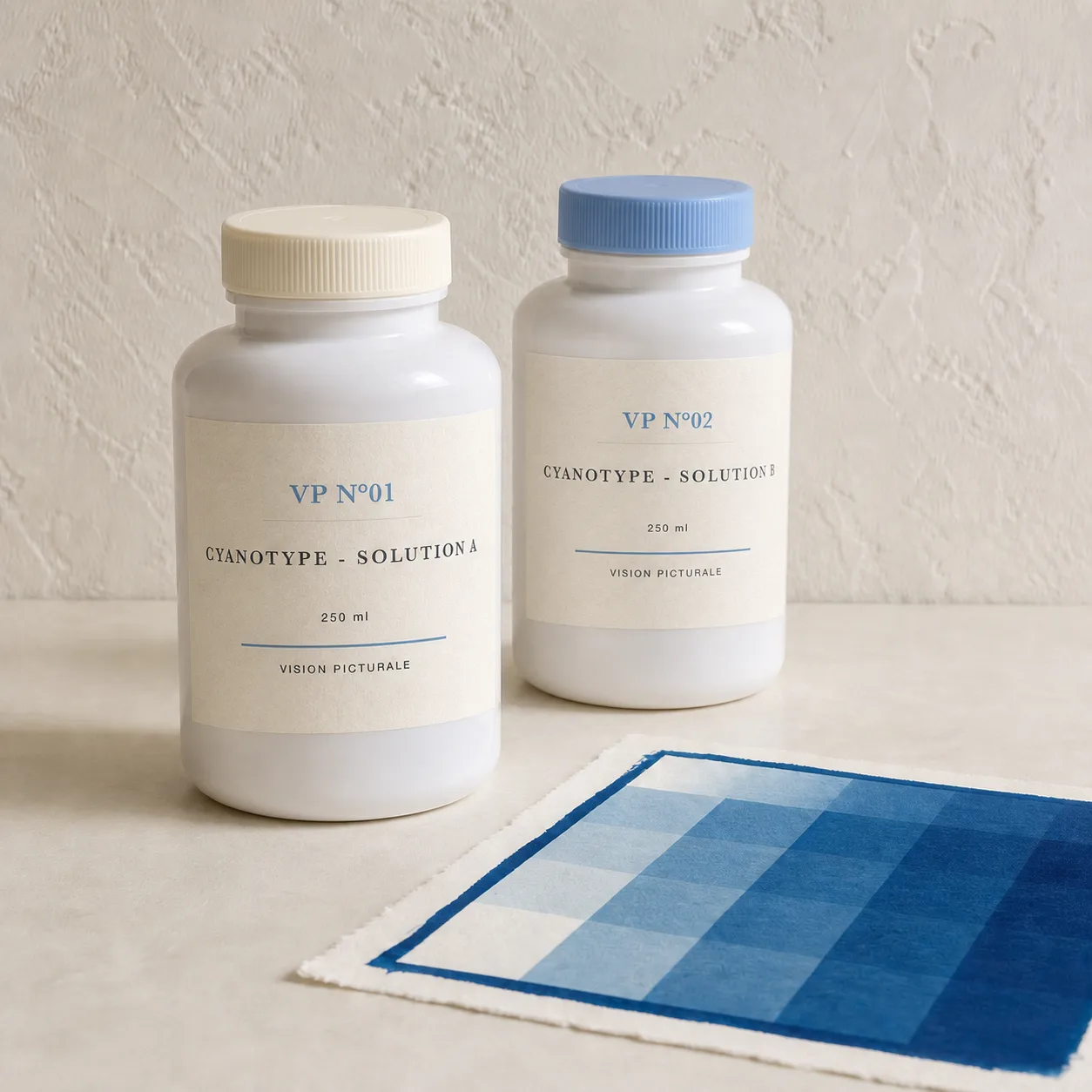
Cyanotype
Deep, timeless Prussian blue
AvailableDiscover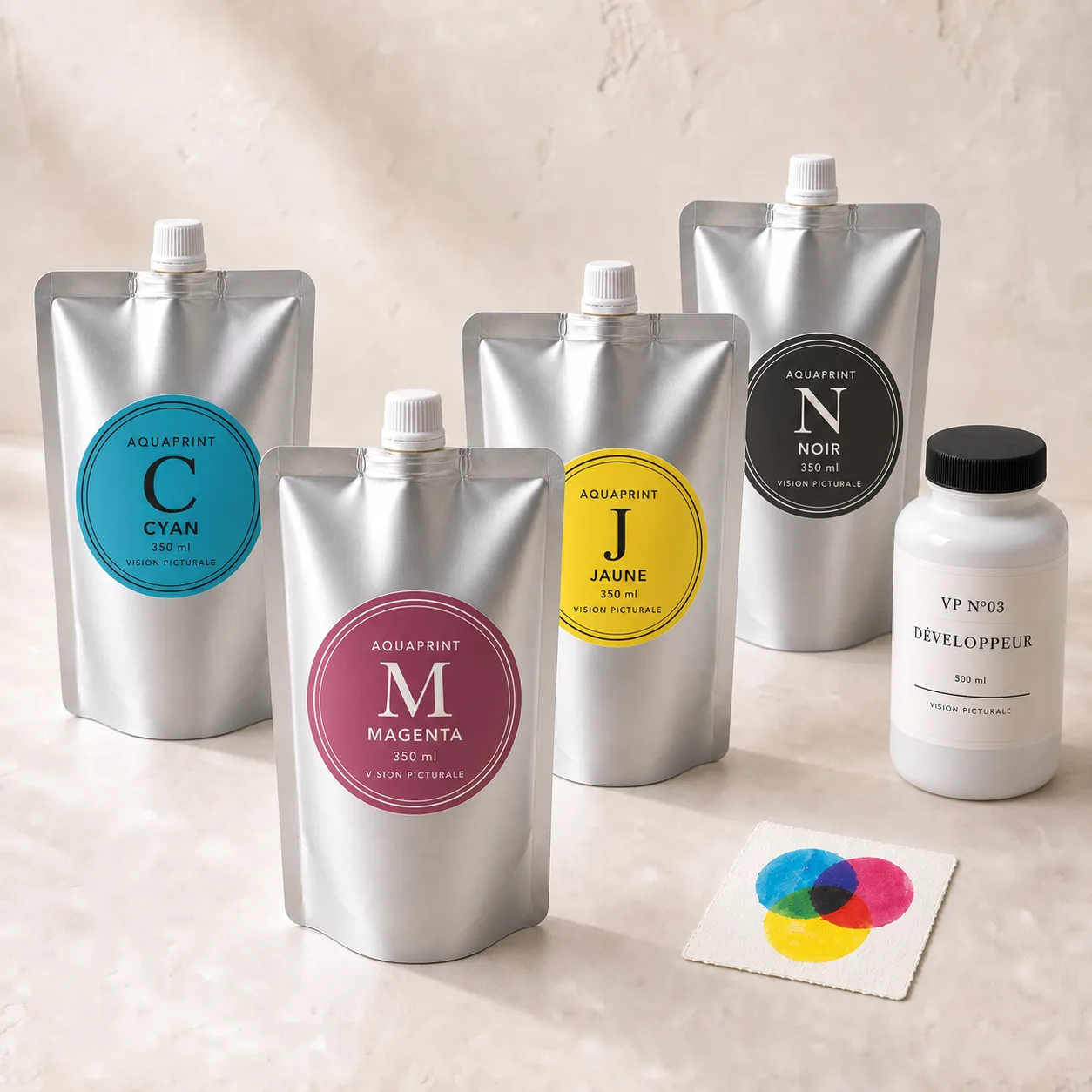
Aquaprint
The precision of photography, the luminosity of watercolour
In productionDiscover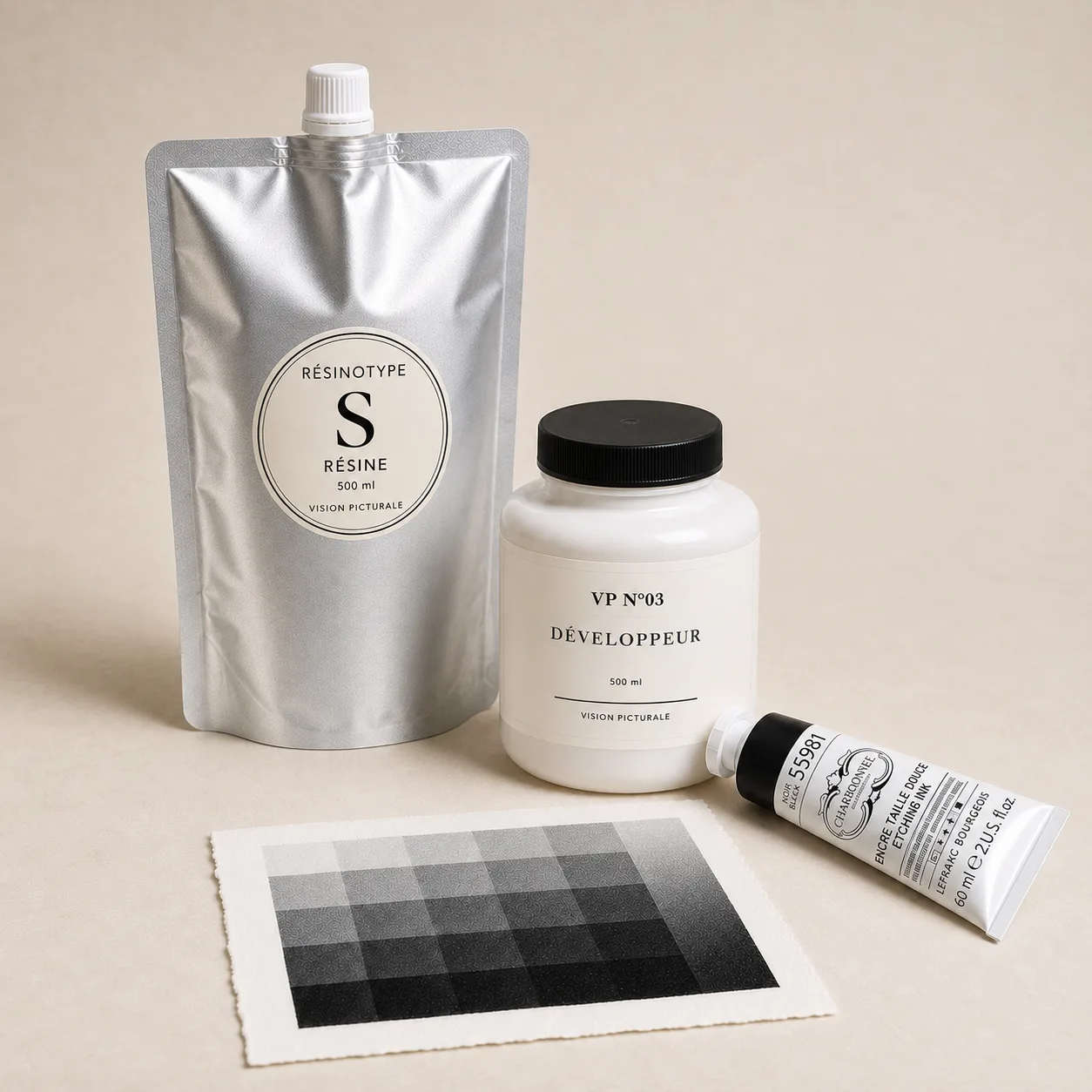
Bromoil
Between painting and photography
In productionDiscover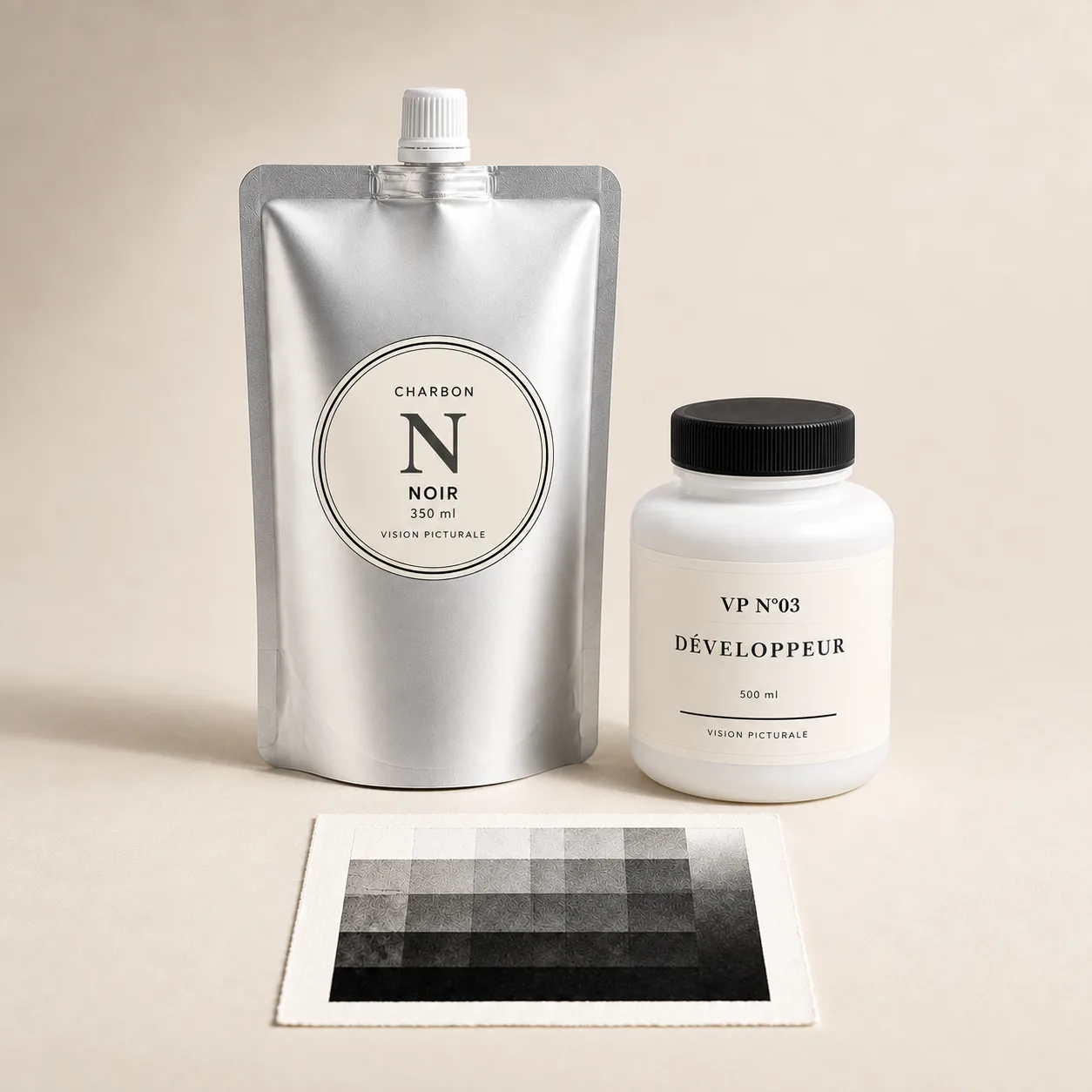
Carbon Process
Deep blacks and a visible relief
In productionDiscover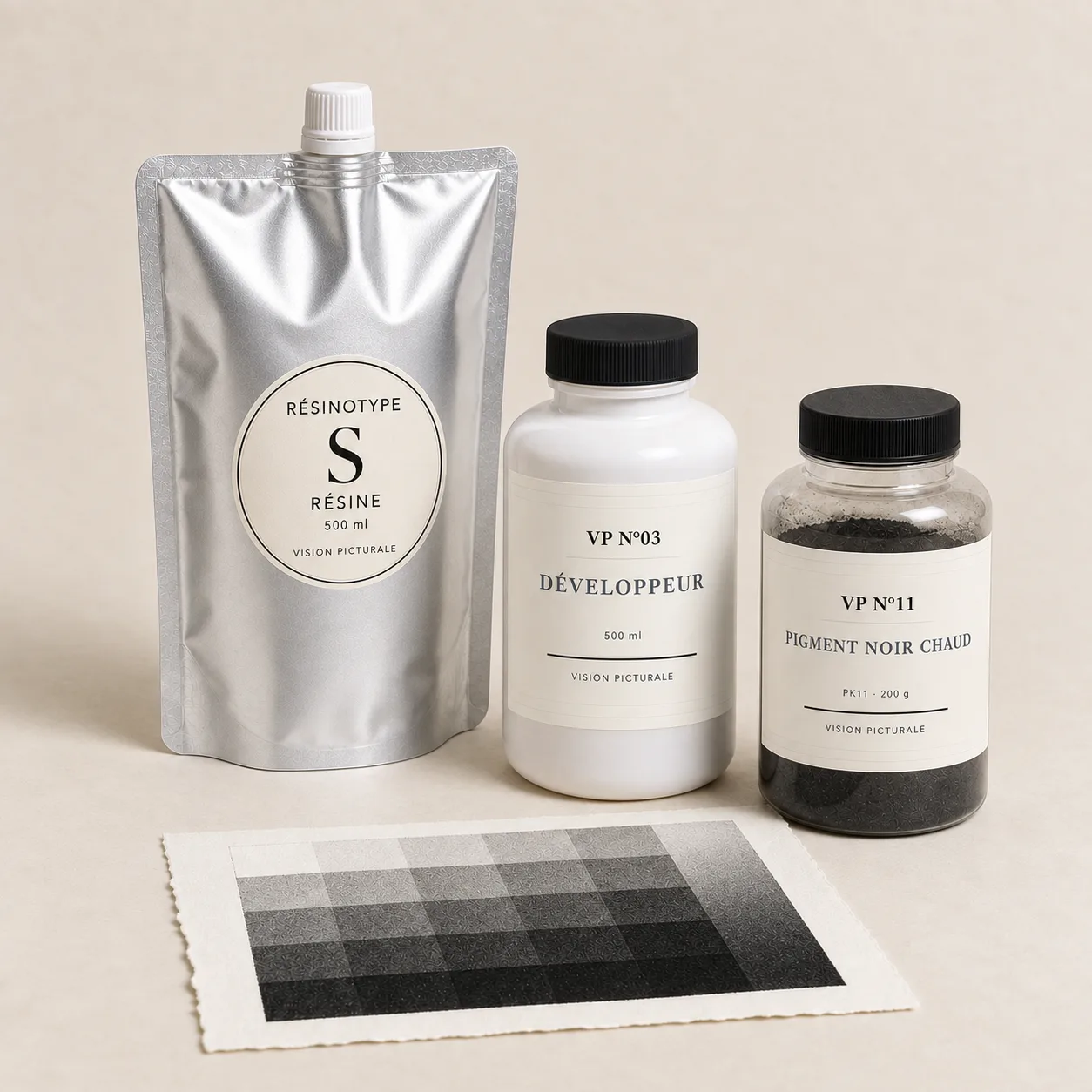
Resinotype
Charcoal effect with velvety reflections
In productionDiscover
Choosing
Start from the result, not from the equipment
A deep blue, a single coat, a simple gesture: cyanotype. It is the only process rated “beginner” in the range, and the only box manufactured today.
CyanotypePainterly matter, layered colours, work in successive passes: Aquaprint, gum bichromate rewritten without bichromate. Advanced level; its variants are presented on its own page.
AquaprintA dense, permanent black and a surface that catches the light: carbon and resinotype for pigment matter, bromoil for greasy ink laid with a brush.
Carbon Process
Frequently asked questions
Do these processes use bichromate?
No. Vision Picturale formulations are dichromate-free — that is the starting point of the range, not an option. Safety information remains specific to each product and appears on its bottle and on its page.
Which process should I start with?
Cyanotype: it is the only one in the range rated “beginner”. One coat, one exposure, and a Prussian blue that appears as the print is washed in water.
Do I need a particular UV source?
Sunlight is enough — 5 to 15 minutes at the height of summer for a cyanotype. For repeatable times all year round, and for processes needing several registered passes, an exposure unit such as the Luminograph keeps exposure constant.
Torn between two looks? Three questions are enough to point the way.
Build my workshopGoing furtherGumoil, a historical process with no box in the catalogue, remains documented and reachable. Gumoil