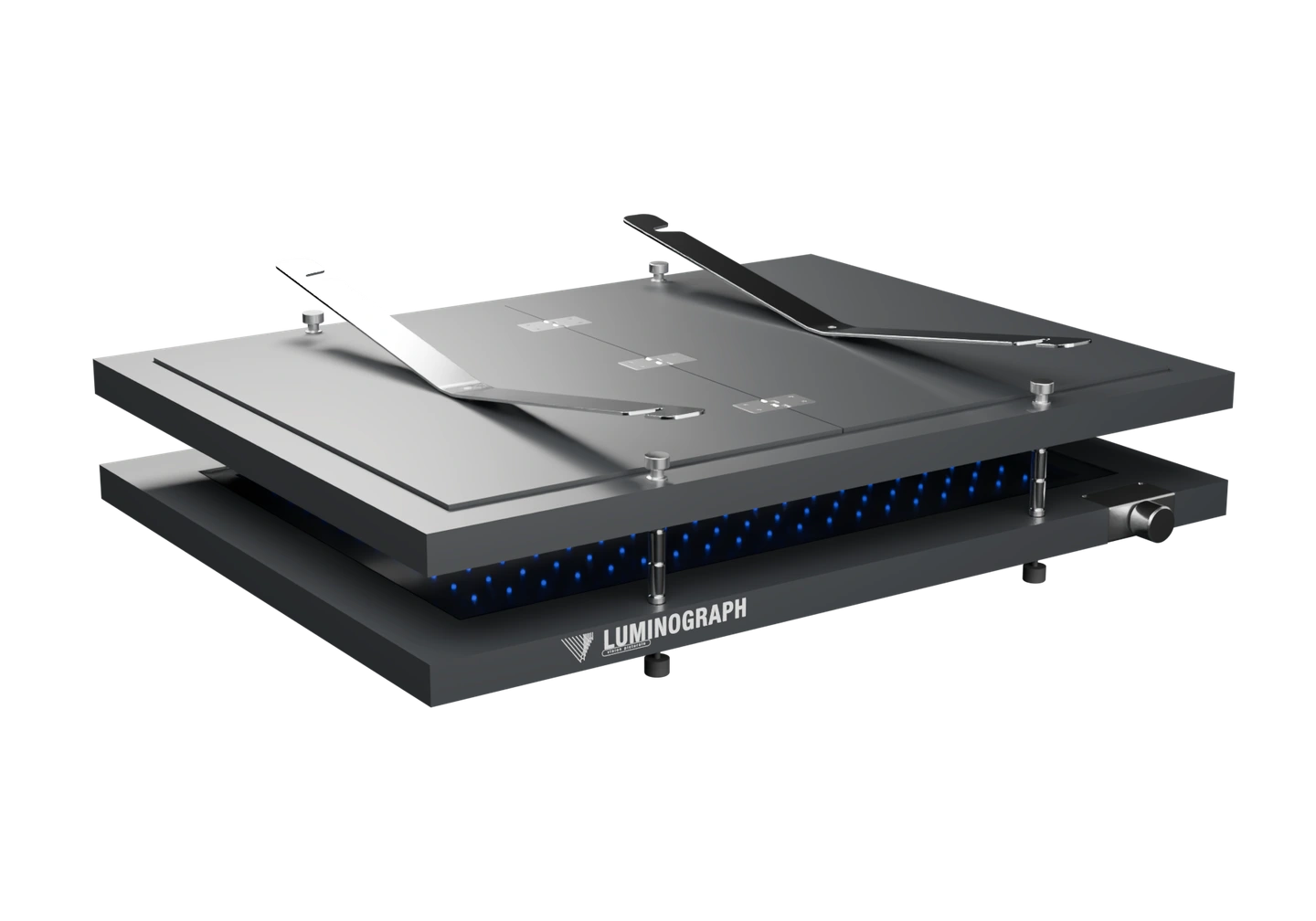
Luminograph A3+
Give your prints
more room.
A UV exposure unit and contact press for your cyanotypes and alternative prints, up to 32 × 48 cm.
Made in France2-year warranty1 year of Calibration Flow Pro included
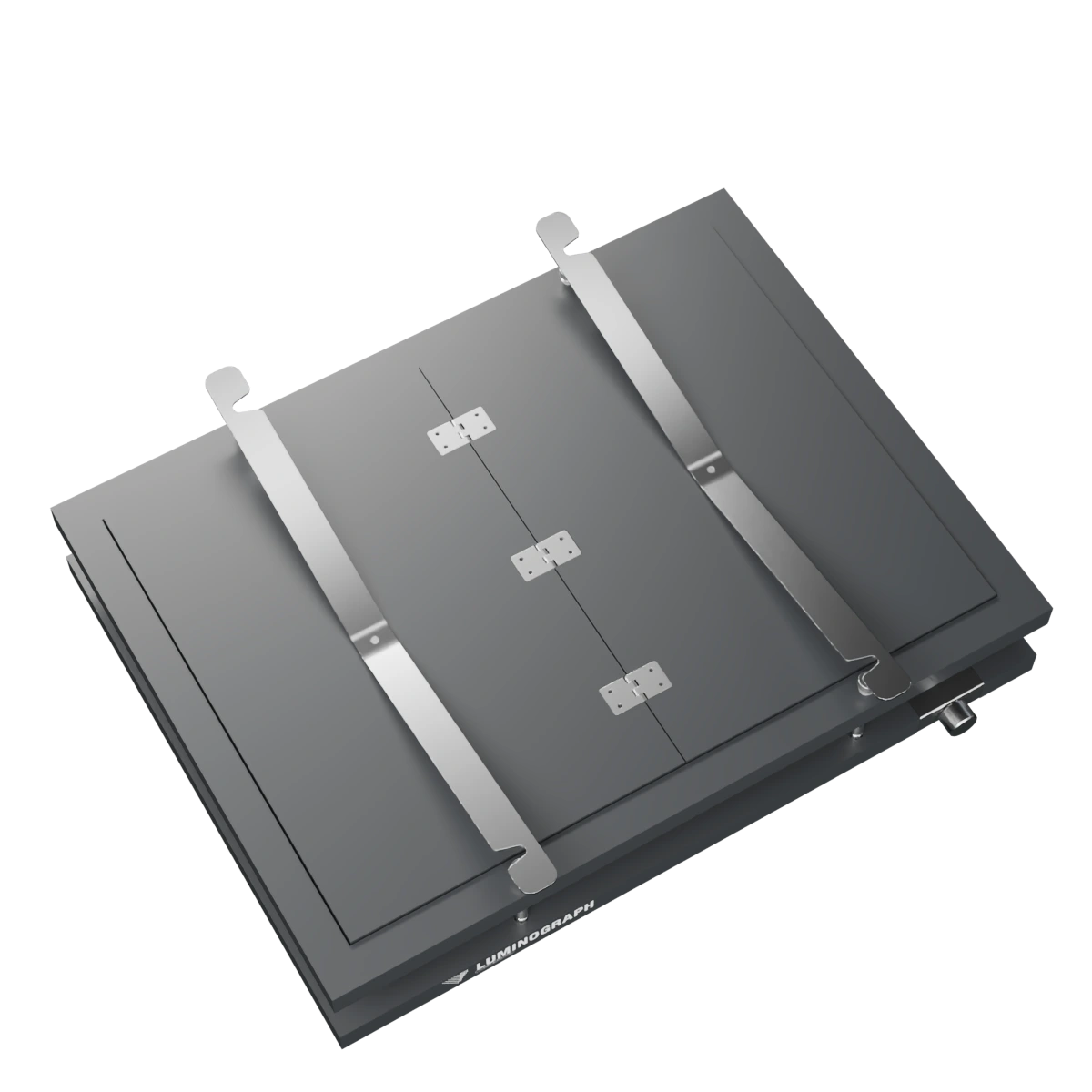 Mechanical press · 2 arms
The contact
Contact makes
the detail.
Two mechanical arms hold the negative against the paper during exposure. Your image is printed by contact, at the size of your negative.
UV light and a mechanical press, together in one instrument.
The light
Red to prepare.
UV to expose.
A red safelight and a UV channel, switched on separately.
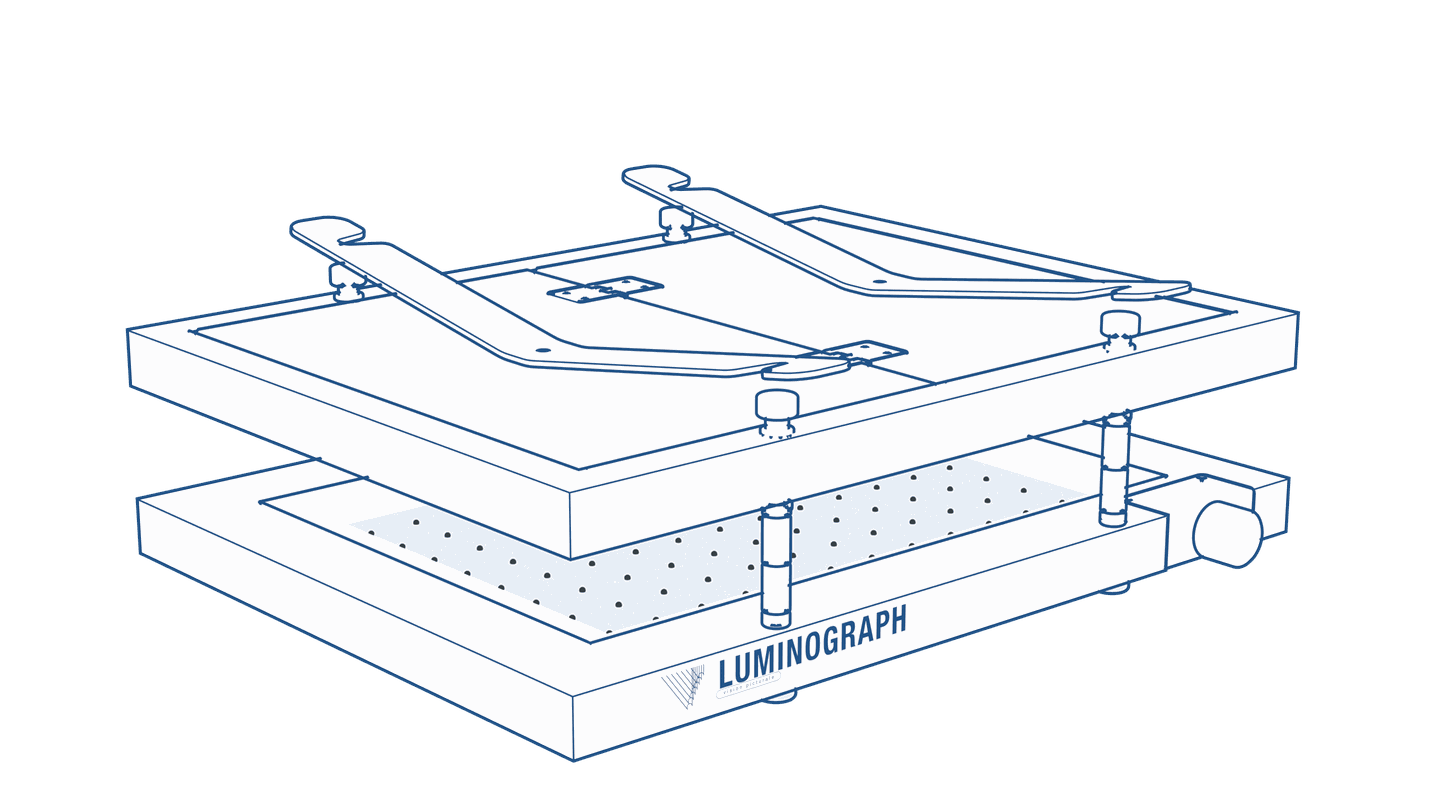
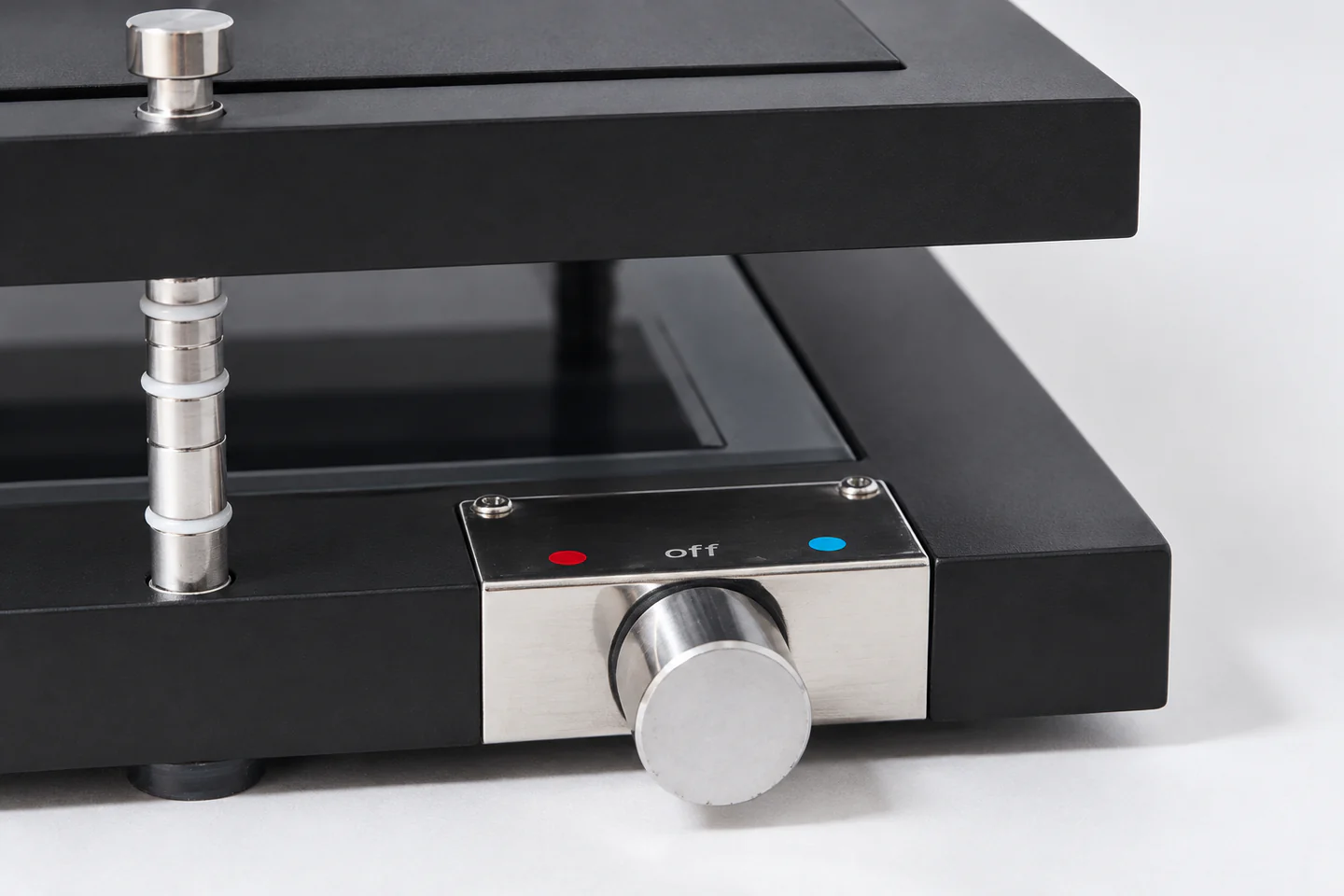
One selector. Three positions.
Red, off, UV. The two light channels are never switched on together.
Optional Wi-Fi module: Calibration Flow switches off the UV at the end of your exposure.
The format of your images
More room.
The same process.
Choose the format for the prints you want to make. Exposure times stay the same when the other printing conditions are identical.
A3+
Paper up to32 × 48 cm
Exposure area36 × 51 cmYour current model
Paper sizes shown at the same scale.
Luminograph A3+
More room for your contact prints. A larger UV exposure area, with the same working method and exposure times as the A4.
- Exposure area
- 36 × 51 cm
- UV power
- 60 W
- Press
- 2 arms
Made in France
Machine only: UV source and mechanical press. Paper, chemistry, negative film and studio tools are selected separately.
Quantity
Orders to France: dispatch within 48 hours
2-year warranty
Secure payment
No instruction manual supplied.
Shipping & returnsTechnical specifications
Technical specifications
A three-position selector drives the lighting: red safelight channel, off, UV channel. The two never light together — the red light lets you prepare and position the negative without fogging the sensitised coat.
The machine doesn't count time for you: it lights, you decide when to stop. Since its output varies with neither the hour nor the season, a watch is enough to repeat exactly the same exposure from one print to the next. The Wi-Fi module, sold separately, takes over that counting: driven from the Calibration Flow app, it switches the UV channel off at the chosen time.
Compatible processes
Indicative exposure times
* Times vary with negative density, paper humidity and the exact process used
Before your first print
A few practical answers.
Do I need the Wi-Fi module?
No. You can switch the UV channel on and off manually and time the exposure with a watch. The optional Wi-Fi module lets Calibration Flow switch off the UV at the chosen time.
What else do I need for a print?
Sensitised paper or your process chemistry, a negative in the final print size, and suitable processing tools. The extras are optional: keep using the equipment you already own.
Does the Luminograph enlarge my negative?
No. It is a contact-printing exposure unit. The negative and the paper are held together by the mechanical press; the negative must match the intended print size.
How do I choose the exposure time?
Start with a test strip for your process and negative. Exposure depends on the chemistry, paper and negative density. Moving from A4 to A3+ does not require a longer exposure when the other conditions stay the same.
Make room for your practice.
Chemistry, paper, negatives: add what you need, and keep using the equipment you already own.
Complete workspace
1/5 steps
01 · Chemistry
1- ——
02 · Support
4- ——
- Needs Primer N°04Needs Primer N°04
- Needs Primer N°04Needs Primer N°04
- ——
03 · Negative
1- ——
04 · UV exposure — included
1- Included
Luminograph A3+
05 · Studio tools
1- ——
Watercolour papers must be primed before sensitising, so Universal Primer N°04 comes with them. It is not on sale yet: mark it “I already have it” if you own some, and these papers open up — or choose PULPØ, which needs none.
Selection total
€699
1 × Luminograph A3+